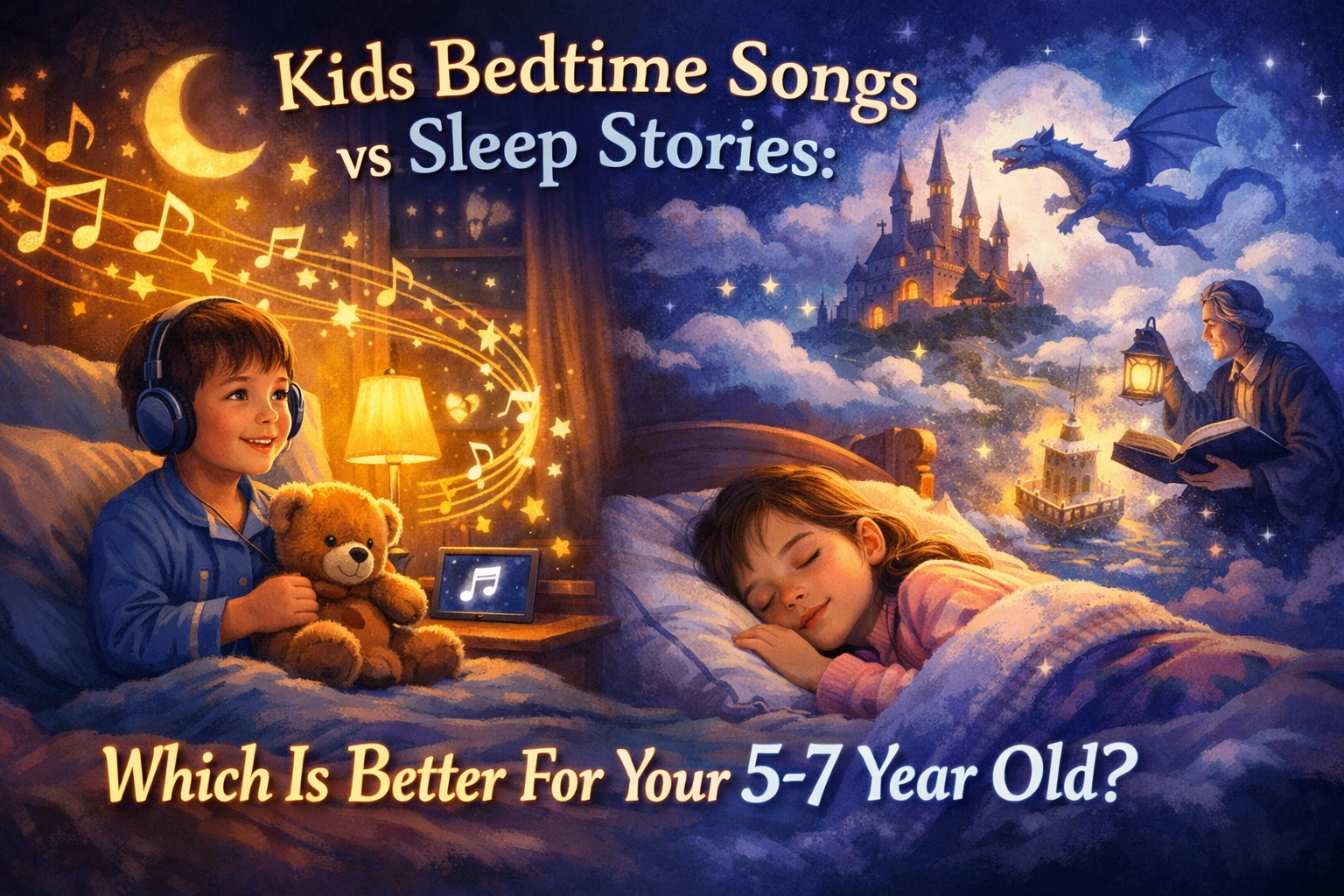
You've probably been there. It's 8:30 PM, your little one is still bouncing off the walls, and you're trying to figure out whether to sing another lullaby or read yet another story. Should you grab the book or hum that favorite bedtime song?
Here's the good news: both kids bedtime songs and sleep stories work. But they work differently, and understanding what each one does can help you pick the right tool for your child's needs.
What Makes Bedtime Songs So Effective?
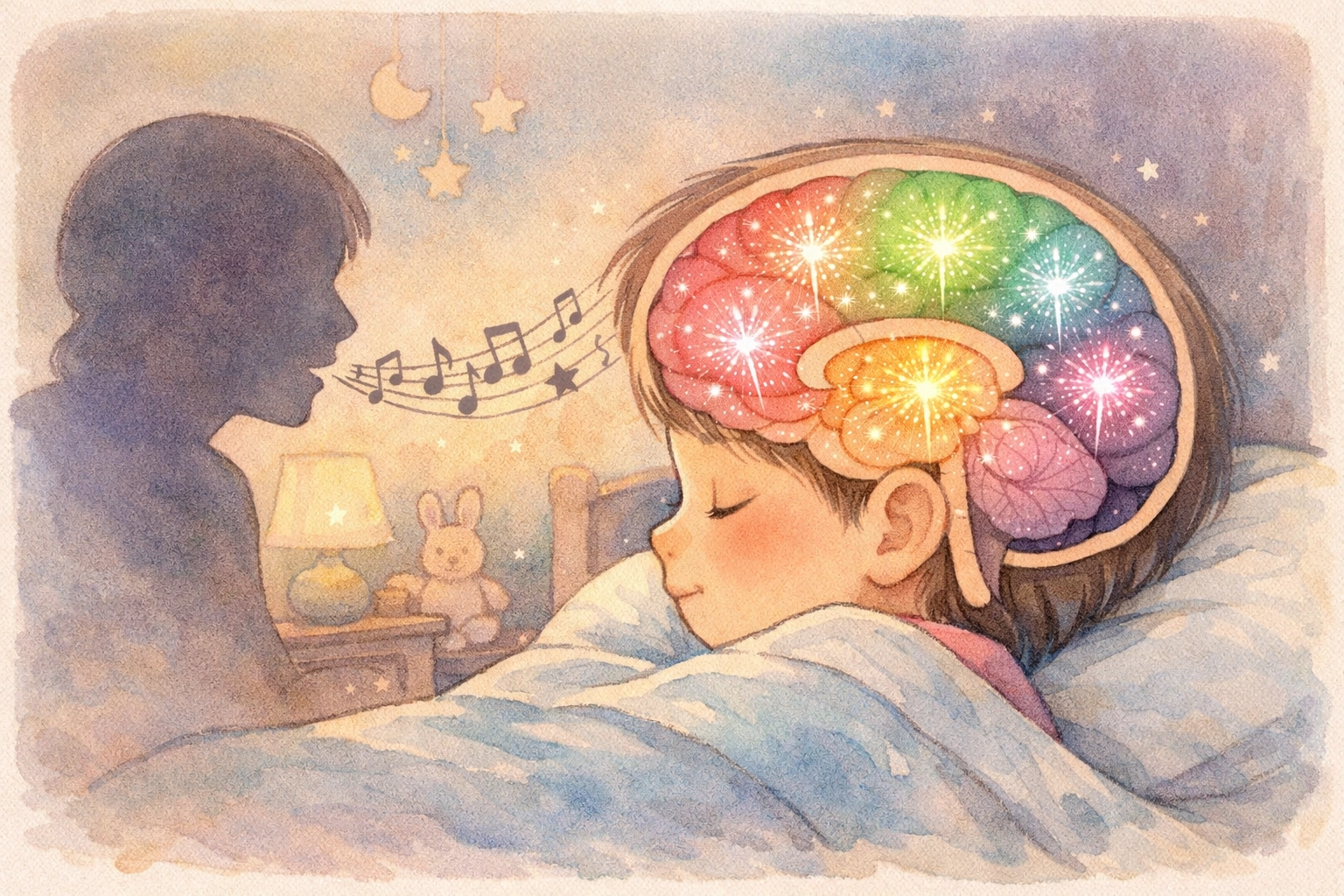
Music does something special to our brains. When your 5 or 7 year old hears a gentle lullaby, multiple parts of their brain light up at once: the areas responsible for language, emotions, and even spatial reasoning.
Research shows that lullabies are actually better than spoken stories at reducing stress and pain in children. Think about that for a second. When your kid is anxious about the dark or worried about tomorrow's school day, a soothing song can calm them down faster than words alone.

Here's why songs work so well:
They create emotional regulation. Music helps kids process their feelings without needing to talk about them. A calming melody naturally slows breathing and heart rate.
They signal sleep time. After a few nights of the same bedtime song, your child's brain starts to recognize it as a sleep cue. It's like flipping a switch that says "time to wind down."
They strengthen your bond. When you sing to your child (even if you think you can't carry a tune), you're creating a special connection. Kids don't care if you're pitch-perfect: they just want to hear your voice.
The brain keeps learning. Even after your child falls asleep, their brain continues processing the music they heard. Pretty cool, right?
You can find plenty of calming bedtime songs on Kids-life.com that are designed specifically for this age group. They're simple, soothing, and easy to make part of your nightly routine.
The Power of Sleep Stories
Stories offer something different but equally valuable. When you read or tell a bedtime story for your 5 year old or 7 year old, you're building their language skills, imagination, and cognitive development.
Language-based bedtime routines (which include reading, storytelling, and yes, even singing) have been linked to longer sleep duration and better verbal test scores. Kids whose families used these routines slept about 9.6 hours per night compared to 9.4 hours for those who didn't. That might not sound like much, but those extra 12 minutes add up over time.
Stories do several important things:
They build vocabulary. Every story introduces new words and concepts. A bedtime story for a 7 year old can be more complex than one for a younger child, helping them grow their language skills at their own pace.
They spark imagination. Stories transport kids to different worlds. This mental journey can be both engaging and calming, helping their active minds settle down.
They create predictability. A familiar story (or story routine) becomes comforting. Kids know what's coming next, which helps them feel safe and secure.
They offer quality time. Snuggling up with a book gives you dedicated one-on-one time with your child at the end of a busy day.
Age Matters: What Works for 5 vs 7 Year Olds?
Your 5 year old and your 7 year old might need different approaches, even though they're close in age.
For your 5 year old:
At this age, kids are still developing their attention spans. They respond well to:
- Shorter, simpler songs with repetitive melodies
- Picture-heavy stories with fewer words
- A mix of both to keep them engaged
- Physical closeness (they still want you right there)
If your 5 year old is anxious or has trouble calming down, songs might be your best bet. The music can soothe them without requiring them to focus on a storyline.
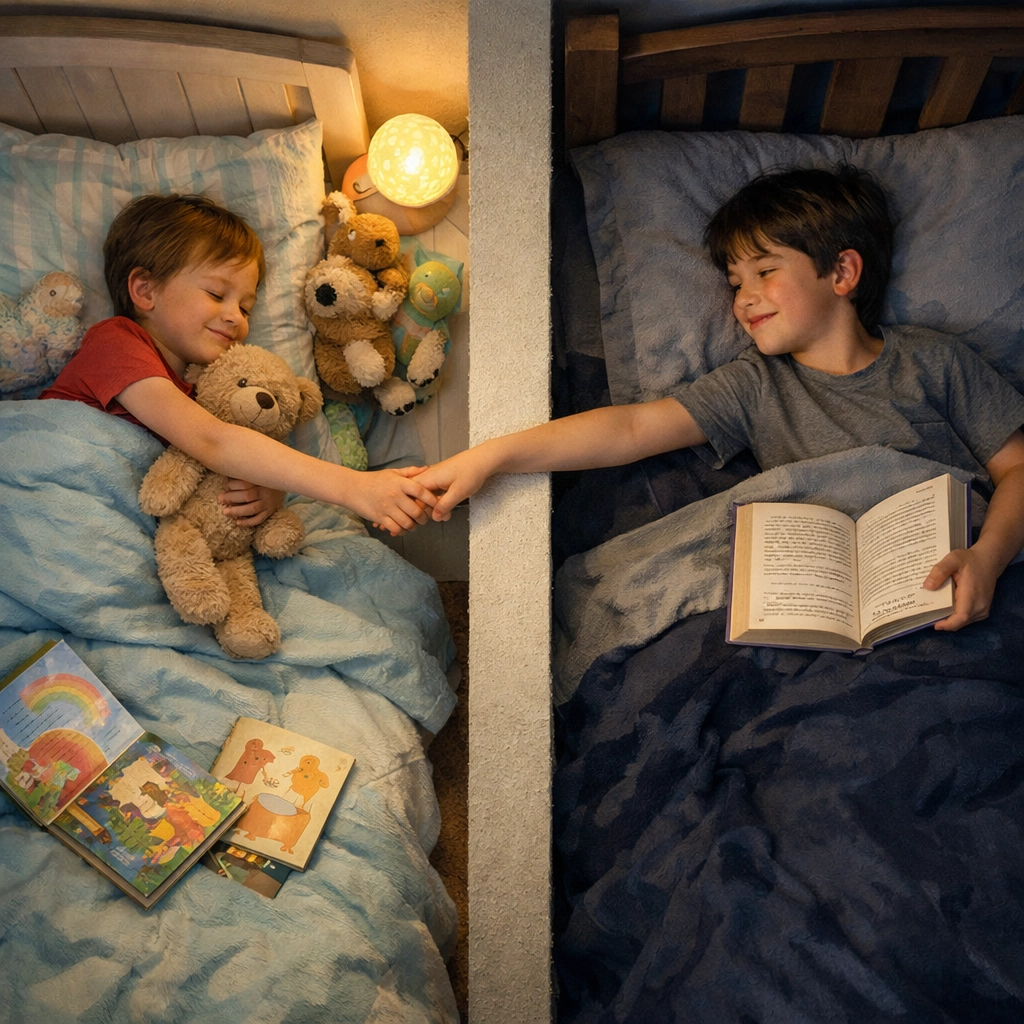
For your 7 year old:
Seven year olds are developing stronger language skills and longer attention spans. They often enjoy:
- More complex stories with actual plots
- Songs they can sing along with (quietly)
- Chapter books where you read one chapter per night
- A bit more independence (though they still want you nearby)
A bedtime story for a 7 year old can be longer and more detailed. They can follow storylines across multiple nights, which gives them something to look forward to.
So Which One Should You Choose?
Here's the real answer: it depends on your child and the specific night.
Choose songs when:
- Your child is stressed, anxious, or overtired
- They need to calm down quickly
- They're resistant to "one more story" negotiations
- You're short on time
- They respond well to routine and repetition
Choose stories when:
- Your child is already calm but not quite sleepy
- You want to work on language development
- They're curious and asking lots of questions
- You have a bit more time for cuddles and connection
- They're in a story-loving phase
The secret? You don't have to choose just one.
Combining Songs and Stories: The Best of Both Worlds
Research suggests that combining language-based bedtime activities (singing, reading, and storytelling) gives kids the best outcomes. They sleep longer and show better cognitive and behavioral results.
Here's a simple routine that works for many families:
The 15-Minute Wind-Down:
- Start with 2-3 calming songs (5 minutes) - Kids-life.com has a great selection
- Read or tell one short story (7-8 minutes)
- End with one final lullaby as they settle into bed (2 minutes)
This gives you the emotional regulation benefits of music plus the cognitive benefits of storytelling.
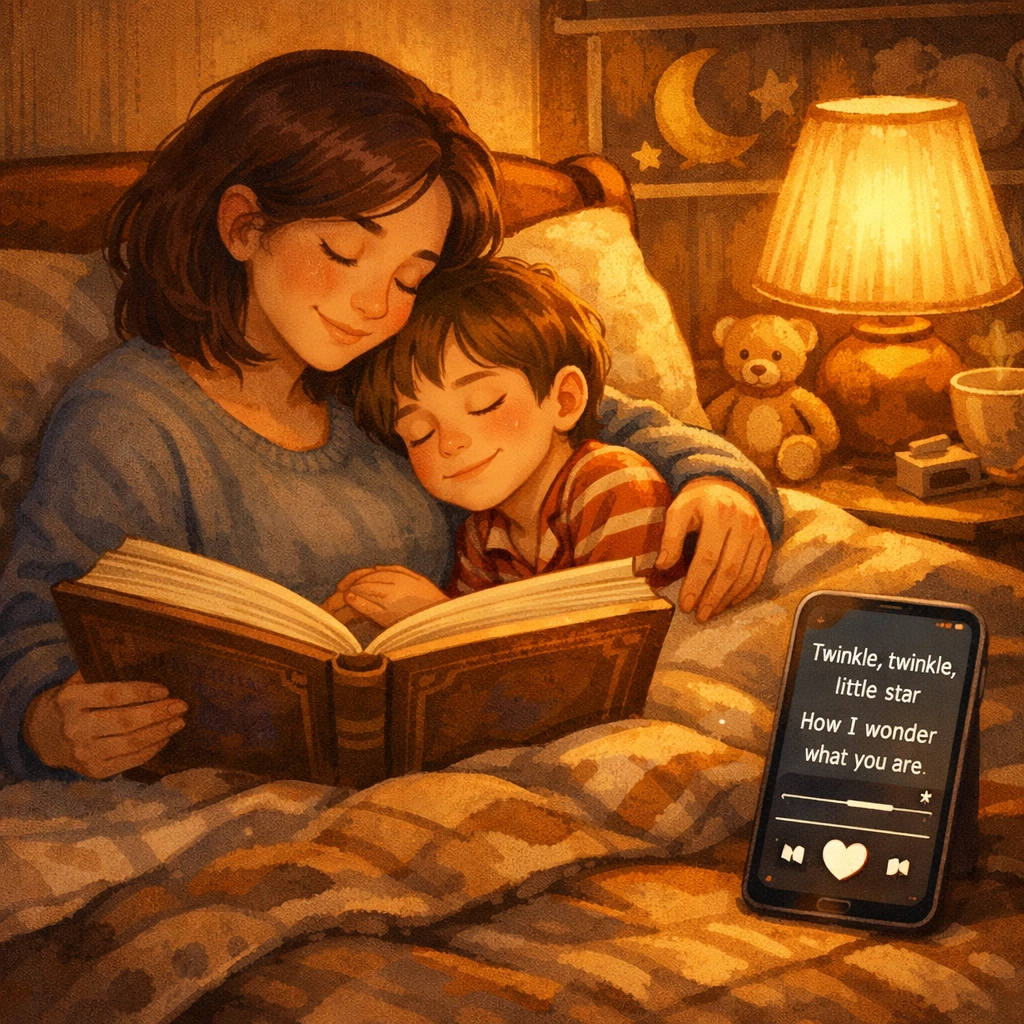
Or try this age-specific approach:
For 5 year olds: Song → Short story → Song
For 7 year olds: Story → Quiet talking time → Song
The key is consistency. Pick a routine and stick with it for at least two weeks. Your child's brain needs time to recognize the pattern and respond to those sleep cues.
Quick Tips for Success
Keep it calm. This isn't the time for "The Wheels on the Bus" or action-packed adventure stories. Save the exciting stuff for daytime.
Let them choose sometimes. Give your child a choice between two songs or two books. It gives them control without overwhelming them with options.
Watch the clock. Start your bedtime routine at the same time each night. Consistency is more important than the specific activities you choose.
Don't stress about perfection. Some nights will go smoothly. Other nights your kid will ask for seventeen more songs. That's normal. Do your best and let go of the rest.
Pay attention to what works. If songs always lead to requests for "just one more," maybe stories work better for your child. If stories get them riled up with questions, stick with music. Every kid is different.
The Bottom Line
Both kids bedtime songs and sleep stories have real benefits backed by research. Songs are especially good at reducing stress and creating quick calm. Stories build language skills and imagination.
For your 5-7 year old, the best approach is probably using both. Create a routine that includes music and storytelling, adjust it based on your child's age and temperament, and stay consistent.
The most important thing? You're showing up every night to help your child wind down. Whether you're singing, reading, or doing both, that consistency and connection matter more than getting the "perfect" routine.
And on those nights when you're exhausted and can barely keep your own eyes open? It's totally okay to put on a gentle kids bedtime song from Kids-life.com and call it good. You're doing great, and so is your kid.